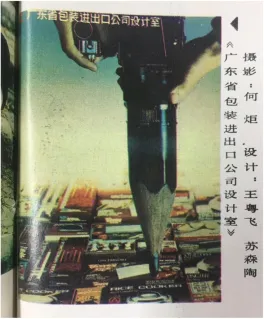
Chinese comic books, known as lianhuanhua, exploded in popularity in the early 1980s, quickly coming to account for a significant portion of a resurgent print culture bouncing back from the publishing limitations of the 1970s. This talk reads the sudden appearance of millions of comic books, comic books informed by a medley of domestic and international styles, against the nascent emergence of a new material culture. In short, borrowing from Henry Jenkins, I examine how "comics and stuff" interact at a moment of fraught historical transition when a new future was eagerly anticipated in the imaginary of various media formats. The talk explores how comic book offered presentational aesthetics that invited readers to "window shop" as they read. An array of new genres, both resuscitated domestic stories and imported adaptations of films and novels, provided space for artists to stage fantastically rich interiors and impressively vertiginous exteriors, giving form to the "new stuff" promised by economic reforms. Yet this newness was underscored by a tension that characterized lianhuanhua more broadly: this type of comic was a medium frequently used to adapt audiovisual material, meaning it was tasked with translating celluloid technologies into drawn graphic forms. By considering drawn mise en scene as a constituent part of a new commodity economy, I aim to elucidate the complex media logics that asked artists who had been schooled in "drawing from life" to draw from the future.
Speaker Bio
Dr. Julia Keblinska is an assistant professor of film and screen studies at Cambridge Film & Screen, Faculty of Modern and Medieval Languages and Literatures (University of Cambridge). She is a scholar of Chinese film and media culture who is interested in broader questions of socialist and East Asian popular culture. Dr. Keblinska has worked in various postdoctoral positions at the Ohio State University and holds a doctorate from the University of California, Berkeley.